
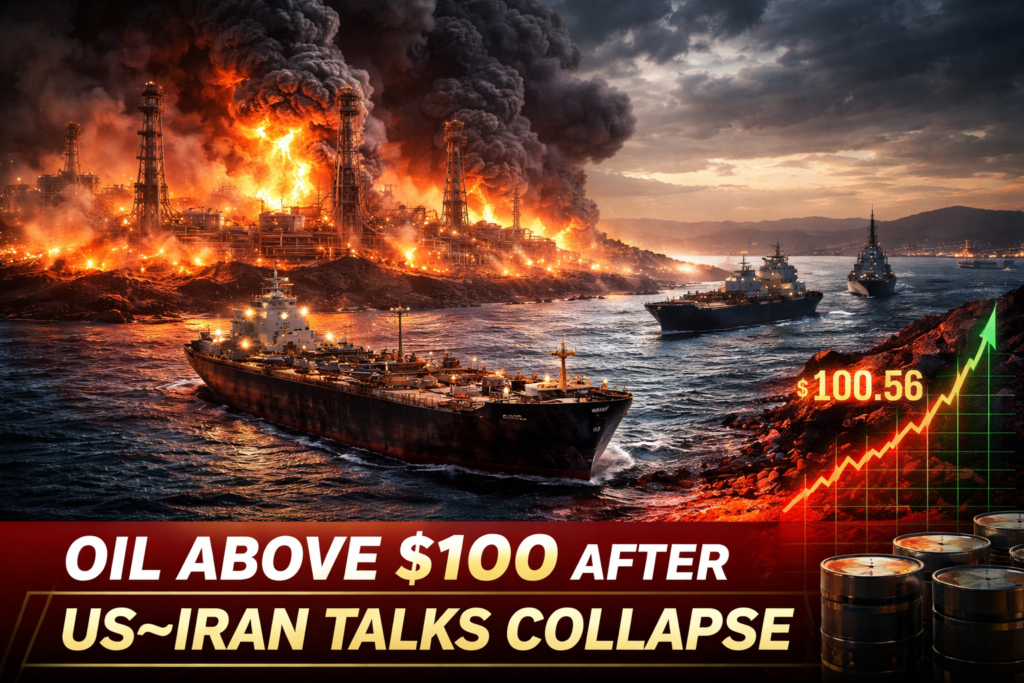

US–Iran Talks Fail, Triggering Global Shock
The latest round of negotiations between the United States and Iran has officially collapsed after marathon discussions failed to produce any agreement. The breakdown has sharply increased geopolitical tensions in the Middle East and raised fears of prolonged instability in global energy markets.
According to multiple reports, both sides walked away without a deal, deepening uncertainty over the future of the ceasefire and nuclear discussions.
Oil Prices Surge Past $100
Following the failed talks:
- Brent crude surged above $100 per barrel
- WTI oil also rose sharply above $104
- Markets reacted instantly to fears of supply disruption
The spike is mainly driven by concerns over the Strait of Hormuz, a critical global oil shipping route.
Analysts say the situation has created a strong “geopolitical risk premium” in oil prices, meaning traders are pricing in the possibility of future supply disruptions.
Why the Situation Matters Globally
The Middle East produces a large share of the world’s oil, and any disruption in the region can:
- Increase fuel prices worldwide 🚗
- Raise inflation in many countries 💰
- Affect stock markets and investor confidence 📉
- Impact transportation and shipping costs 🚢
Experts warn that if tensions continue, oil prices could remain elevated for a longer period.
Impact on Global Markets
- Global stock markets have turned volatile
- Energy stocks are gaining while travel and industrial sectors are falling
- Investors are shifting towards safer assets like gold and the US dollar
What Happens Next?
Key factors to watch:
- Whether diplomacy resumes between US and Iran
- Stability of the Strait of Hormuz shipping route
- Any military escalation in the region
- OPEC+ response to rising oil prices
Conclusion
The collapse of US–Iran negotiations has once again pushed the world into a period of economic uncertainty. With oil prices crossing the $100 mark, global markets are expected to remain volatile until diplomatic progress is restored.