
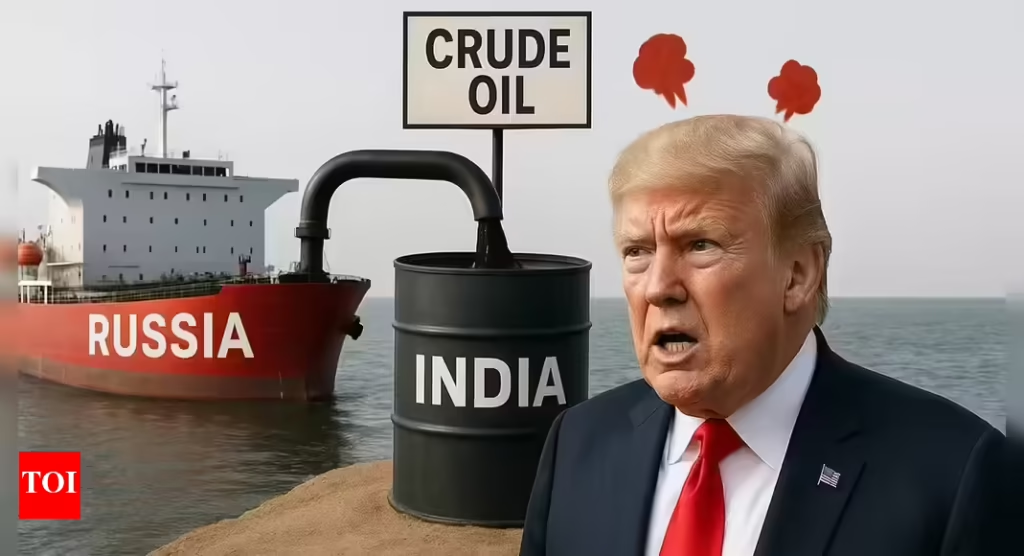

In a move that has sent ripples across global trade markets, the United States has advanced legislation that could allow tariffs of up to 500% on imports from India and other countries purchasing Russian energy. The proposed measure, part of the Sanctioning Russia Act of 2025, is designed to penalize nations that continue to buy Russian oil, gas, uranium, and related products in the wake of Russia’s invasion of Ukraine.
The Proposal in Detail
The bill, recently endorsed by former U.S. President Donald Trump, specifically names India, China, and Brazil as potential targets due to their continued purchase of Russian crude oil. While the 500% tariff figure has grabbed headlines, it is crucial to understand that this level is not yet enforced. The measure simply gives the U.S. President the authority to impose tariffs up to that level if deemed necessary. The legislation still requires Congressional approval before implementation.
Currently, the U.S. has already imposed tariffs of 50% on a range of Indian exports, including textiles, gems and jewelry, and seafood, due to India’s oil imports from Russia. The proposed 500% tariff represents a potential escalation in U.S. trade policy aimed at curbing support for Russia.
Implications for India
A 500% tariff, if enacted, would have severe implications for Indian exports, making products virtually non-competitive in the U.S. market. Industries heavily reliant on the American market, such as textiles and jewelry, could face dramatic declines in demand. Such punitive measures could also strain U.S.-India relations and trigger challenges at the World Trade Organization (WTO).
India has so far responded cautiously. Officials have emphasized the need for dialogue and a measured approach, while also exploring options to mitigate the impact on exporters. Analysts warn that such extreme tariffs could push India to diversify its export markets and reduce dependence on the U.S. for certain goods.
Global Trade and Geopolitics at Stake
The proposed bill highlights the increasingly intertwined nature of energy politics and trade policy. By targeting countries that continue to purchase Russian energy, the U.S. aims to economically pressure Moscow, but the collateral impact on global trade partners could be significant.
If enacted, the legislation would mark one of the most severe trade sanctions in recent history, demonstrating how energy policy can directly influence economic diplomacy. Countries like India will have to carefully navigate these pressures while balancing energy needs and strategic partnerships.
Conclusion
While the 500% tariff remains a proposed measure, the situation underscores the fragility of international trade in a world where geopolitical conflicts intersect with economic interests. For India, the coming months will be critical in determining how to respond diplomatically and economically, as global attention focuses on the U.S. Congress’s next moves.
