
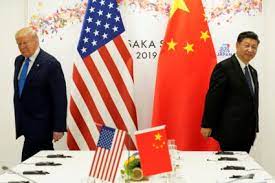

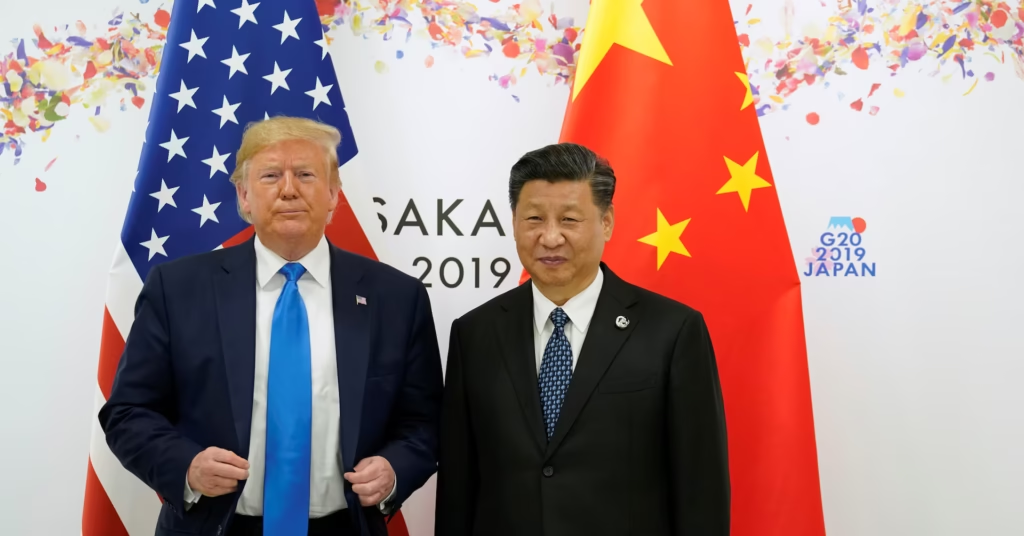
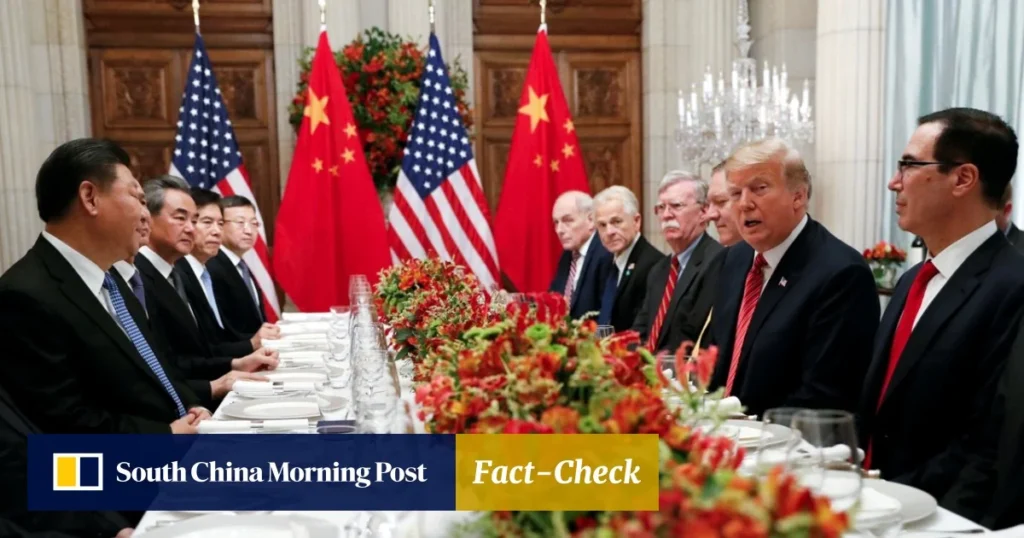
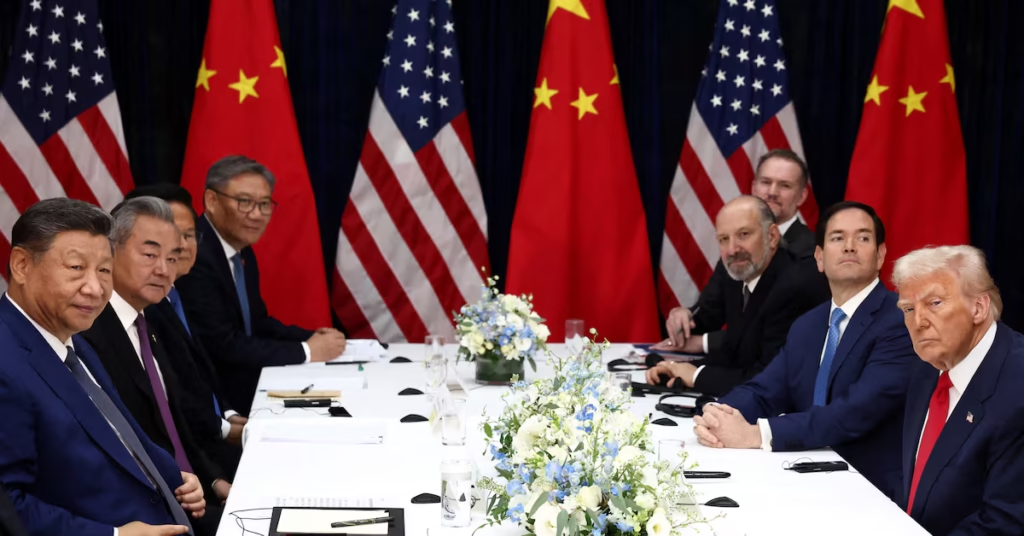
In a remarkable diplomatic exchange, former U.S. President Donald Trump recently described his meeting with Chinese President Xi Jinping as a “12 out of 10” success, a statement that has captured global attention. Trump praised Xi as a “tremendous leader” and highlighted China as a “very powerful country,” signaling a positive tone in what has historically been a tense relationship between the two superpowers. The meeting, held in a high-stakes context, focused on trade, technology, and broader geopolitical issues. Analysts suggest that while optimism is high, substantial challenges remain, making the follow-up developments crucial for global economic and political stability.
Key Issues Discussed During the Meeting
1. Trade and Tariffs
Trade was a central topic in the Trump-Xi discussions. The United States and China have experienced prolonged tension over tariffs, export restrictions, and trade imbalances. Trump’s meeting with Xi focused on finding potential solutions to some of these disputes. Analysts believe that even minor adjustments in trade policy could have wide-reaching effects on global markets, influencing industries from electronics to agriculture.
Trump has emphasized that fair and balanced trade benefits both nations and the global economy. By signaling a willingness to engage constructively with China, the former president sought to reassure investors, businesses, and international partners. However, experts caution that resolving the deeper structural issues underlying the trade imbalance could take years of negotiation.
2. Critical Materials and Technology
Another key topic was rare earth elements and advanced technology exports, which are crucial for manufacturing electronics, defense equipment, and green energy technologies. China controls a significant portion of the global rare earth supply, giving it strategic leverage in global tech markets.
The U.S. has been exploring ways to diversify its supply chains, reduce dependence on China, and safeguard critical technology. The discussions between Trump and Xi signal an awareness of these strategic concerns and may lead to agreements that ensure stability in the supply of essential materials. For countries like India, which are also dependent on rare earth imports, these developments could influence industrial planning and trade strategies.
3. Broader Geopolitics
Beyond trade and economics, the leaders discussed pressing geopolitical issues, including the ongoing conflict in Ukraine. Trump suggested that Xi could potentially influence Russia’s actions, highlighting China’s growing importance in global diplomacy.
The meeting also touched upon regional security issues in the Indo-Pacific, where both the U.S. and China maintain strategic interests. The positive tone of the discussions may offer opportunities for cooperative approaches to conflict resolution and global stability. However, the specifics of such cooperation remain unclear, and analysts emphasize that words must be translated into actionable policies.
Why the Meeting Matters
The meeting between Trump and Xi stands out for its unusually positive tone. Previous U.S.-China engagements, particularly during trade disputes, were marked by sharp criticism and public tensions. By describing the meeting as a “12 out of 10” and praising Xi as a “tremendous leader,” Trump has shifted the narrative toward optimism and potential collaboration.
For the United States, a more constructive relationship with China could ease tensions in global markets, stabilize supply chains, and reduce uncertainty for businesses engaged in international trade. Conversely, for China, positive diplomatic engagement with the U.S. reinforces its global standing and strengthens its ability to influence international economic and political matters.
For India, the implications are multifaceted. Trade flows could be affected, particularly in sectors like technology, electronics, and rare earth materials. Furthermore, shifts in U.S.-China relations could impact regional geopolitical dynamics, including strategic alignments in the Indo-Pacific region. Policymakers in New Delhi will need to carefully monitor these developments to anticipate both opportunities and risks.
Potential Outcomes and Challenges
While the meeting has been described in glowing terms, experts caution that real change will require sustained negotiation and concrete agreements. Key challenges include:
- Trade Disputes – Although both sides expressed a willingness to collaborate, resolving deep-rooted trade imbalances will require structural adjustments, regulatory reforms, and potentially, phased implementation of new policies.
- Technology and Supply Chains – Ensuring a stable flow of critical materials and technology will demand coordination, transparency, and trust. Any disruption could affect global industries, particularly in electronics, defense, and renewable energy sectors.
- Geopolitical Tensions – While the meeting signaled goodwill, underlying strategic competition between the U.S. and China persists. Issues such as Taiwan, military posturing in the South China Sea, and influence in the Indo-Pacific region will continue to be points of friction.
Despite these challenges, the positive rhetoric from both leaders may provide a window for incremental progress and confidence-building measures that benefit global stability.
Looking Ahead
Observers will be closely watching the follow-up visits and negotiations. Key milestones include Trump’s planned visit to China in April and the potential Xi visit to the U.S. afterward. These meetings could serve as opportunities to formalize agreements on trade, technology, and global security issues.
Investors, businesses, and policymakers are advised to stay informed about these developments, as any policy shifts can have immediate effects on markets and international relations. Countries in Asia, including India, should particularly monitor trade and supply chain implications, as well as regional strategic alignments.
In conclusion, while optimism surrounding the Trump-Xi meeting is high, the path to sustained cooperation remains complex. The positive tone, high-level engagement, and promises of follow-up visits signal potential for progress, but concrete outcomes will depend on careful negotiation, implementation of agreements, and management of underlying strategic tensions.