

When we talk about global climate patterns, one name that often comes up is La Niña. This fascinating natural phenomenon has the power to shape weather patterns across continents — influencing everything from rainfall and droughts to hurricanes and winter storms. But what exactly is the La Niña Effect, and why does it matter? Let’s break it down.
🌎 What Is the La Niña Effect?
La Niña (Spanish for “the little girl”) is a climate pattern that occurs when sea surface temperatures in the central and eastern Pacific Ocean become cooler than average. It’s the opposite of El Niño, which brings warmer-than-normal ocean temperatures to the same region.
Both La Niña and El Niño are part of a larger cycle called the El Niño–Southern Oscillation (ENSO) — a natural process that plays a major role in driving weather patterns around the world.
💨 How Does La Niña Form?
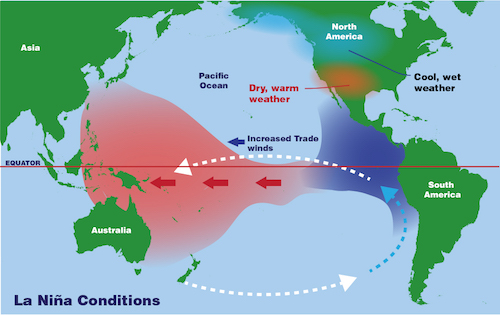
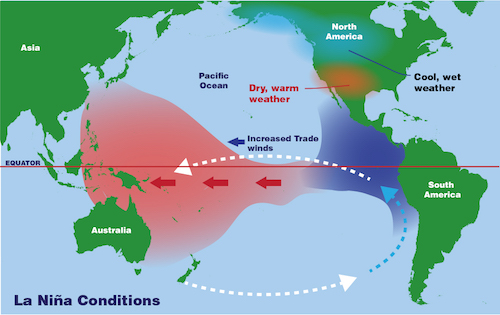
La Niña begins with changes in the Pacific Ocean’s trade winds — the winds that usually blow from east to west near the equator.
Here’s what happens:
- As a result, the central and eastern Pacific Ocean cools down, and atmospheric circulation patterns shift — altering weather around the globe.
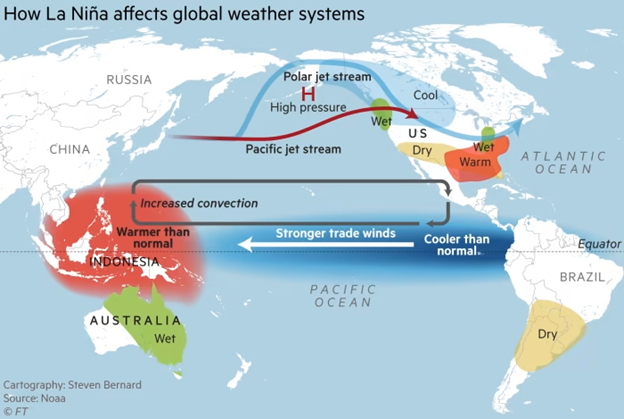
- The trade winds strengthen, pushing warm surface water toward Asia.
- This allows cold, nutrient-rich water from the deep ocean to rise to the surface near South America (a process known as upwelling).
🌦️ Global Weather Effects of La Niña
La Niña doesn’t just affect the Pacific Ocean — it influences weather across multiple continents.
🌀 North America
- Colder, wetter winters in the northern U.S. and Canada.
- Warmer, drier conditions in the southern U.S. (especially Texas and Florida).
- Increased likelihood of snowstorms in the northern states.
☔ Asia & Australia
- Heavier rainfall and greater risk of flooding in Indonesia and northern Australia.
- More monsoon activity in South and Southeast Asia.
🌵 South America
- Drier-than-normal conditions along the west coast (Peru and Chile).
- Cooler temperatures in the eastern parts of the continent.
🌍 Africa
- Droughts in East Africa (such as Kenya and Ethiopia).
- Wetter conditions in southern Africa.
🌪️ Atlantic Ocean
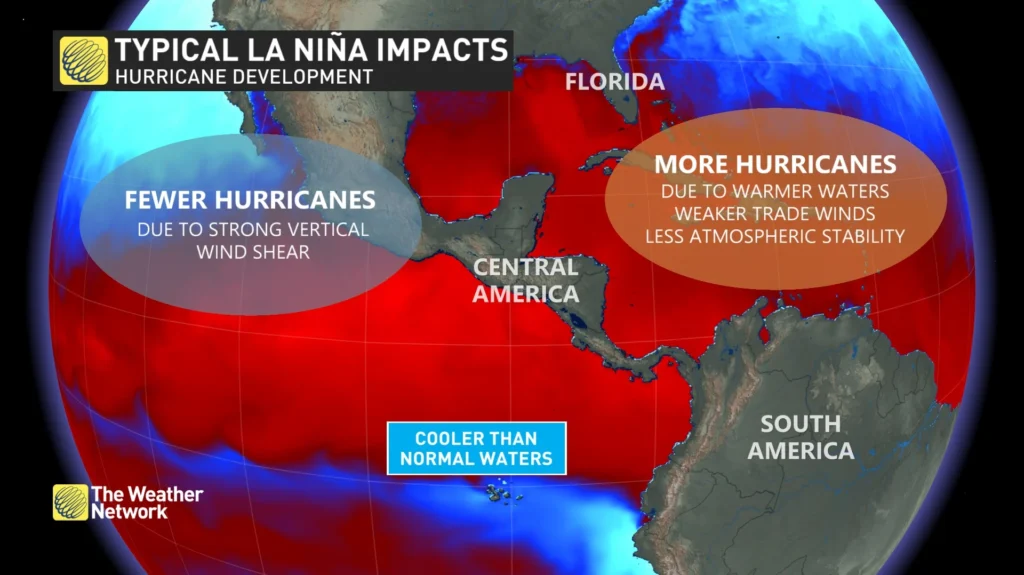
- La Niña can fuel more intense hurricanes, as cooler Pacific temperatures reduce wind shear — allowing storms in the Atlantic to strengthen more easily.
🌱 Environmental and Economic Impacts
The La Niña Effect reaches far beyond weather forecasts. It affects ecosystems, agriculture, and economies around the world.
- 🌾 Agriculture: Crop yields may drop in drought-prone areas, while heavy rains can damage farmlands elsewhere.
- 🐟 Fisheries: Cooler waters off the South American coast increase ocean nutrients, supporting larger fish populations — a boost for local fisheries.
- 🌪️ Natural Disasters: Floods, landslides, and droughts often follow La Niña events, leading to billions in damages globally.
🔄 How Often Does La Niña Occur?
La Niña events typically develop every 2 to 7 years, often lasting 9 to 12 months — though some persist for up to two years. After La Niña fades, conditions may shift to El Niño or a neutral phase of ENSO.
🌏 Why Understanding La Niña Matters
Studying the La Niña Effect helps scientists predict extreme weather and prepare communities for potential impacts. Accurate forecasting can save lives, protect crops, and reduce economic losses.
As climate change continues to alter global weather systems, understanding patterns like La Niña is more important than ever.
🧭 Final Thoughts
The La Niña Effect is a powerful reminder of how interconnected our planet’s systems are. What happens in the Pacific Ocean can ripple across the globe — shaping rainfall, temperature, and storm activity thousands of miles away.
By keeping an eye on the Pacific, we can better anticipate nature’s next move — and build a world that’s ready for it.