
Introduction
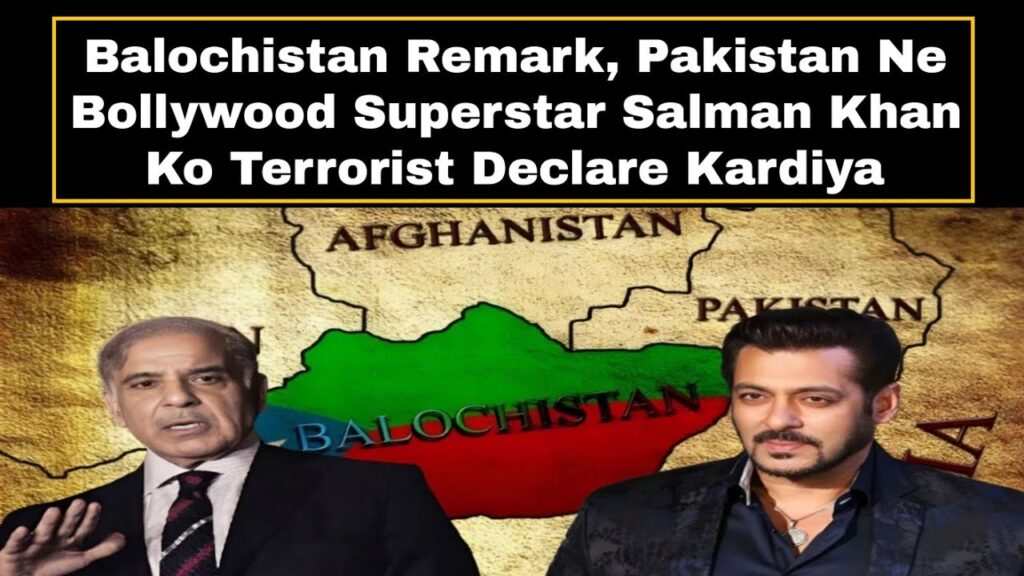
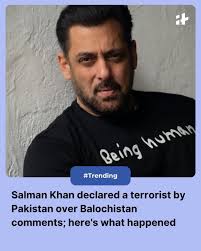
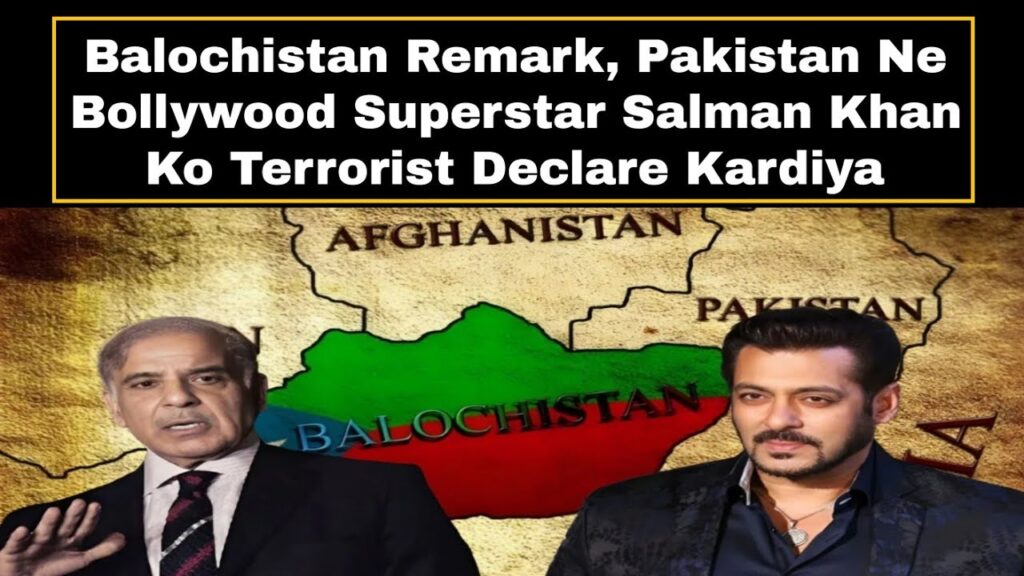
In late October 2025, social media erupted with a shocking claim — that Pakistan had declared Bollywood superstar Salman Khan a “terrorist” over his recent remarks about Balochistan. The rumor spread like wildfire, sparking outrage, memes, and confusion across India and Pakistan.
What Salman Khan Actually Said About Balochistan
At the heart of the controversy lies a simple sentence.
Salman Khan attended the Joy Forum 2025 in Riyadh, Saudi Arabia, an event celebrating the Gulf’s growing film and entertainment industry. During an on-stage conversation about global collaboration, Khan said:
“There are people from Balochistan, there are people from Afghanistan, there are people from Pakistan… everyone is working here together.”
The actor was clearly speaking about the diversity of artists working in the Middle East. But by mentioning Balochistan separately from Pakistan, he unintentionally touched a raw nerve — especially among Pakistanis sensitive to any suggestion that Balochistan is separate from the country.
Why the Remark Triggered Backlash
To outsiders, it may seem like an overreaction. But within Pakistan, Balochistan is a highly sensitive topic.
It’s the country’s largest and most resource-rich province, yet has long faced political unrest and separatist movements demanding autonomy or independence. Because of this, any statement — especially from an international figure — that seems to treat Balochistan as distinct from Pakistan can trigger nationalist outrage.
So when Salman Khan’s remark went viral, some Pakistani social media users accused him of “insulting Pakistan’s sovereignty.” The backlash was swift, emotional, and — as it turned out — fertile ground for misinformation.
The Fake Government Notice That Fooled Millions
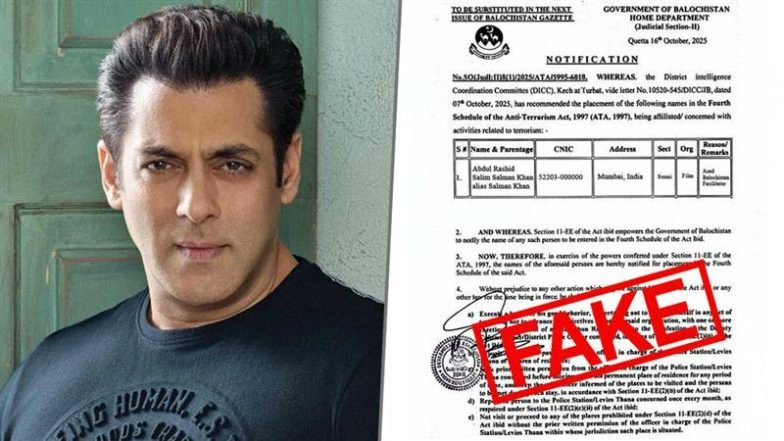
A day after the video clip spread online, screenshots of an “official notice” from the Government of Balochistan began circulating on X (Twitter), Facebook, and WhatsApp.
The document claimed that Salman Khan had been declared an “Azad Balochistan Facilitator” under Pakistan’s Anti-Terrorism Act (ATA) 1997 — effectively labeling him a terrorist and placing him on the Fourth Schedule (Pakistan’s watchlist for individuals suspected of extremist links).
Fact-Check: The Document Was Completely Fake
Soon after the story went viral, Pakistani journalists and independent fact-checkers began to investigate the so-called “terrorist declaration.” What they found quickly debunked the claim.
1. The format and numbering were wrong
The letter’s reference number and layout did not match the official template used by the Balochistan Home and Tribal Affairs Department. Officials confirmed that no such notification had been issued.
2. The date made no sense
Some versions of the fake document were dated October 7, more than a week before Salman Khan even made his remark at the Joy Forum event — proving it was fabricated in advance.
3. No record in Pakistan’s official terrorism list
The National Counter Terrorism Authority (NACTA) maintains Pakistan’s official list of individuals under surveillance for extremist or terror-related activity. Salman Khan’s name does not appear anywhere on that list.
4. Official government denial
The Pakistan Ministry of Information & Broadcasting issued a public clarification, calling the viral document “fake and misleading.” It urged citizens to avoid spreading unverified social media content.
How the Fake News Spread So Quickly
The viral story followed a familiar pattern of online misinformation. A shocking claim — paired with a seemingly authentic document — triggered emotional responses and spread rapidly through echo chambers.
Once a few social media influencers shared the image with sensational captions like “Pakistan Declares Salman Khan a Terrorist!”, the rumor snowballed. Within hours, thousands of users had reposted it, many assuming it was genuine because of the official-looking formatting.
Even some Indian entertainment websites briefly picked up the story without confirming its authenticity, amplifying the hoax to an even larger audience before later issuing corrections.
The Political Sensitivity Behind the Outrage
To understand why this particular rumor found traction, one must understand how sensitive the topic of Balochistan is in Pakistan.
For decades, the province has been home to separatist movements, and Pakistani authorities have tightly controlled discourse around it. International comments that appear sympathetic to Baloch nationalism often trigger strong reactions, both online and in political circles.
Salman Khan, whose movies are widely loved in Pakistan, likely meant no offense — but his phrasing was enough for nationalist accounts to seize the moment and paint it as a political statement.
Salman Khan Has Not Responded
As of now, Salman Khan has not made any public comment about the controversy. Sources close to the actor say he was surprised by the social media reaction but has chosen not to dignify fake claims with a response.
No official notice, ban, or legal action exists against him in Pakistan. He remains free to travel internationally, and there’s been no indication of any diplomatic fallout.
Lessons From the Controversy
This episode is a textbook example of how misinformation spreads faster than facts. A few key lessons stand out:
- Context is everything.
Salman Khan’s remark was about diversity, not politics — but in today’s hyperconnected world, tone and phrasing can easily be misinterpreted.
- Fake documents are easy to make, hard to debunk quickly.
A forged government letter can look convincing enough to fool millions, especially if it circulates before authorities respond.
- Emotion drives virality.
Outrage — whether nationalist or celebrity-driven — fuels engagement. People share before verifying.
- Media responsibility matters.
Even minor entertainment portals should verify claims before publishing. False headlines can damage reputations and inflame tensions.
The Bottom Line
The claim that Pakistan declared Salman Khan a “terrorist” after his Balochistan remark is completely false.
There is no official document, no government action, and no credible source supporting the claim. The viral “notification” circulating online was a fabricated image, quickly debunked by Pakistan’s own government and independent fact-checkers.
In the age of viral misinformation, even a few words can snowball into an international controversy. The Salman Khan case reminds us of one simple truth — always verify before you share.