


A Shocking Evening Near a National Landmark
On the evening of 10 November 2025, around 6:52 PM, a powerful car explosion occurred near the Red Fort (Lal Qila) in Delhi, close to the Lal Qila Metro Station.
The blast ripped through a busy traffic junction, killing at least eight people and injuring dozens more.
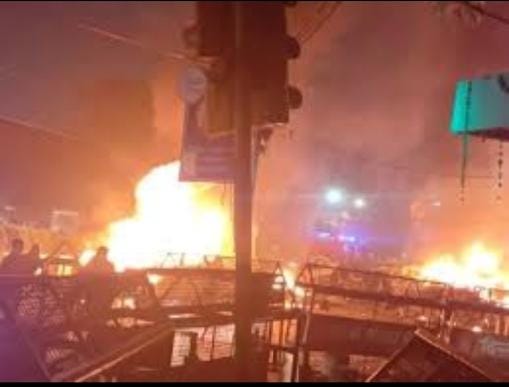
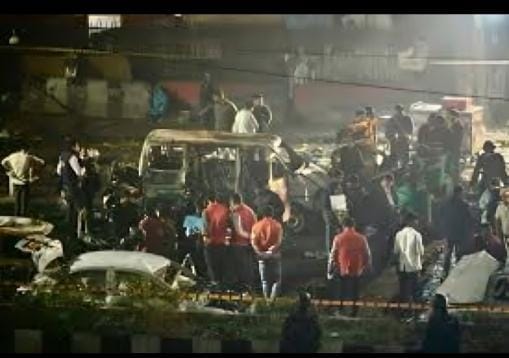
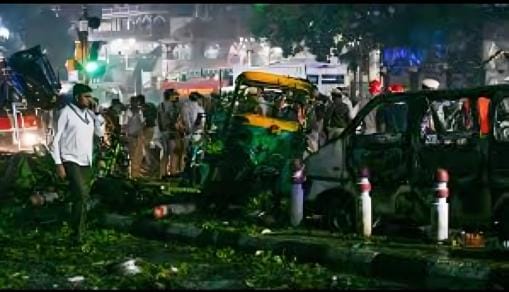
Eyewitnesses described scenes of chaos and horror — flames engulfing vehicles, shattered glass covering the street, and thick black smoke rising against the backdrop of the historic fort. What was an ordinary evening for commuters and tourists quickly turned into one of the darkest nights the city has witnessed in recent years.
The Epicenter of the Blast
The explosion occurred in a slow-moving car that had stopped at a red light near the metro station. Within seconds, the car burst into flames, causing a chain reaction — nearby autos, taxis, and private vehicles caught fire, and pedestrians ran for safety.
The area, located between Chandni Chowk and Jama Masjid, is one of the busiest and most crowded parts of Old Delhi. This is not only a commercial hub but also a heritage site visited by thousands daily — making the location symbolically and strategically significant.
Firefighters and ambulances reached the spot within minutes, while police cordoned off the area. The injured were rushed to Lok Nayak and AIIMS Trauma Center, where several remain critical.
A City on High Alert
Following the blast, Delhi Police declared a citywide security alert. Major public places — including metro stations, shopping malls, railway stations, and government offices — were placed under tightened security surveillance.
The National Security Guard (NSG), National Investigation Agency (NIA), and Delhi Police Special Cell have all joined forces to investigate the explosion.
The Home Ministry has directed an immediate probe, while the Prime Minister expressed deep condolences to the victims’ families and called the incident a “cowardly act against humanity.”
Investigation Underway: Terror or Accident?
As of now, the exact cause of the explosion remains under investigation.
Authorities are examining several possible scenarios:
- Terror Attack:
The case has been registered under the Unlawful Activities (Prevention) Act (UAPA) — India’s main anti-terrorism law. This suggests that investigators suspect deliberate intent rather than an accidental fire.
CCTV footage from the area shows two unidentified individuals leaving the car moments before the blast, intensifying speculation of a planned attack. - Technical Malfunction:
Another theory points to a possible CNG cylinder explosion due to mechanical failure. However, forensic teams have recovered traces of chemical explosives, making this theory less likely.
The NIA and forensic experts are now analyzing metal fragments, explosive residue, and digital data from surrounding surveillance cameras to determine whether the device was a remote-controlled IED or a timer-based bomb.
Why This Location Matters
The Red Fort is not just a historical monument — it is a symbol of India’s sovereignty. Every year, the Prime Minister addresses the nation from its ramparts on Independence Day.
A blast near such a high-profile site raises grave concerns about the security of national heritage zones and crowded urban hubs.
Experts note that an attack at a symbolic site often aims to create maximum psychological impact — spreading fear and undermining public confidence.
Public and Global Reactions
The tragedy triggered a wave of grief and outrage across India and abroad.
- Indian leaders, including the President and Home Minister, condemned the attack and assured that those responsible “will face the harshest punishment.”
- Opposition parties demanded a high-level review of Delhi’s security measures and questioned how an explosive-laden car could enter such a sensitive zone.
- Foreign embassies, including the U.S., U.K., and Australia, issued travel advisories urging citizens to avoid crowded areas in Delhi for the next several days.
- On social media, hashtags like #RedFortBlast and #DelhiExplosion trended for hours as citizens expressed solidarity with the victims.
Impact on DailyLife
In the aftermath of the explosion, traffic in Old Delhi came to a standstill for hours. Metro services on the Violet Line were briefly suspended. Shops and restaurants near the Red Fort shut down early, and tourism activity in the area dropped sharply.
Public anxiety remains high, especially with major festivals and political events approaching. The Delhi government has announced an emergency review of all public-space security protocols, including random vehicle checks and drone surveillance around sensitive zones.
Key Challenges Ahead
- Speedy and Transparent Investigation
Identifying the perpetrators and uncovering the motive behind the attack is crucial. Quick, credible findings will help restore public confidence and prevent misinformation from spreading. - Enhanced Urban Security Infrastructure
Delhi’s high-density zones need better surveillance systems — including AI-driven CCTV networks, explosive detectors, and more police patrols.
Special attention must be given to vehicle screening near monuments and metro stations. - Public Awareness and Communication
During crises, misinformation spreads faster than facts. The government must communicate verified updates promptly to keep the public informed and avoid panic. - Psychological Support for Victims and Witnesses
Beyond physical recovery, survivors and witnesses may need long-term mental health support. NGOs and state health services should coordinate counseling and trauma care. - Preventing Future Attacks
Whether or not this was a terror act, the event exposes serious gaps in urban safety. Strengthening intelligence networks, especially against sleeper cells or radical modules, must be a top priority.
A City’s Resilience Tested
Delhi has endured numerous security challenges over the years — from the 2008 serial blasts to the 2011 High Court bombing. Each time, the city has shown resilience and unity.
This tragedy near the Red Fort once again tests that spirit.
As investigations continue, one thing remains certain: public safety must never be compromised in the world’s second-most populous city.
Modern cities like Delhi must balance heritage, tourism, and security through technology, vigilance, and public cooperation.
Conclusion
The Red Fort car blast of November 2025 is a grim reminder that even the most historic and secure places can be vulnerable to sudden violence. It was not just an attack on people — it was an assault on the collective sense of safety in the national capital.
India now faces the dual challenge of bringing the culprits to justice and rebuilding public confidence in its urban security framework.
As investigators work tirelessly, the nation stands in solidarity with the victims, determined to ensure that such a night never repeats itself.