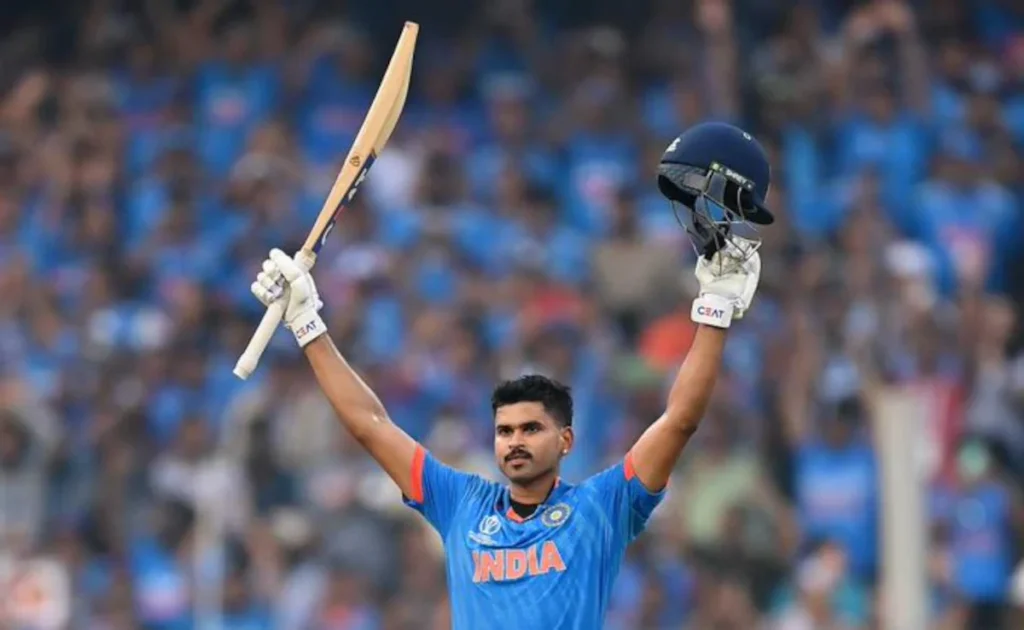

Iyer’s absence is more than just a missing name on the team sheet — it’s the loss of stability, experience, and an anchor who often bridges the gap between the top order and finishers. Over the past few years, he has mastered the art of rebuilding innings after early wickets and accelerating at the right time.
However, one of India’s biggest strengths in modern cricket has been its bench depth. The domestic circuit, the IPL, and India A tours have consistently produced talented batters ready to step up. With Iyer unavailable, selectors now face an exciting yet challenging question — who deserves the nod to fill that vital No. 4 slot?
Let’s take a closer look at three players who could potentially replace Shreyas Iyer in the upcoming ODI series against South Africa.
1. Rajat Patidar – The Like-for-Like Successor
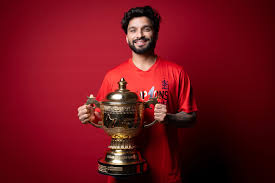
If India is looking for the closest possible replacement for Shreyas Iyer in terms of technique, temperament, and role definition, Rajat Patidar stands out as the most natural choice.
The 31-year-old from Madhya Pradesh has been a consistent performer in domestic cricket, particularly in the middle order. He has built a reputation for calmness under pressure — a trait that mirrors Iyer’s own style. Whether it’s rotating the strike in tricky situations or counter-attacking when the game demands, Patidar has shown he can adapt seamlessly.
His exploits in the IPL with Royal Challengers Bengaluru and in India A matches have underlined his ability to handle quality bowling. After recovering from injury earlier this year, he returned to domestic cricket in strong form, scoring freely in both List A and first-class games.
Patidar has already donned the India cap in ODIs, giving him a taste of international cricket. While his sample size is small, he looked assured at the crease and displayed the right intent — aggressive yet composed.
2. Tilak Varma – The Young Maverick
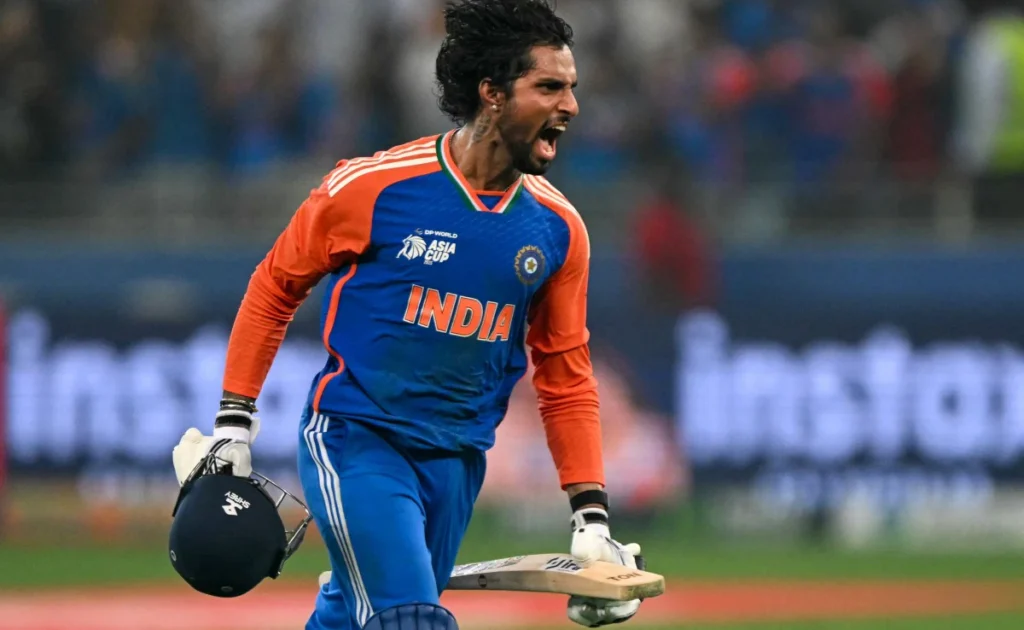
If the selectors decide to think beyond immediate stability and instead focus on long-term investment, Tilak Varma could be the bold and exciting choice.
At just 22, Tilak has already shown remarkable maturity in India’s white-ball setup. A graceful left-hander with a calm temperament, he’s been one of the brightest young prospects to emerge in recent years. His ability to play both spin and pace with equal ease makes him a versatile middle-order option.
Tilak first turned heads in the IPL, representing Mumbai Indians, where he often played the role of a crisis-saver. He’s not just a power-hitter; he’s a thinker at the crease — someone who constructs his innings smartly, rotating the strike and picking the right bowlers to target.
In his brief international career so far, Tilak has shown flashes of brilliance in both T20Is and ODIs. What makes him particularly appealing in Iyer’s absence is the left-hand factor. India’s middle order is dominated by right-handers, and a left-hander like Tilak can break that monotony, making life harder for opposition bowlers trying to maintain a consistent line.
The one area where Tilak still has room to grow is in pacing his innings in longer formats. ODIs demand a mix of patience and aggression, and while he has shown both in parts, consistency will be the key. But this series could be the perfect opportunity for him to evolve.
If India sees this as a transition phase leading up to future ICC events, Tilak Varma could be the smart long-term investment.
3. Sanju Samson – The Experienced Wildcard
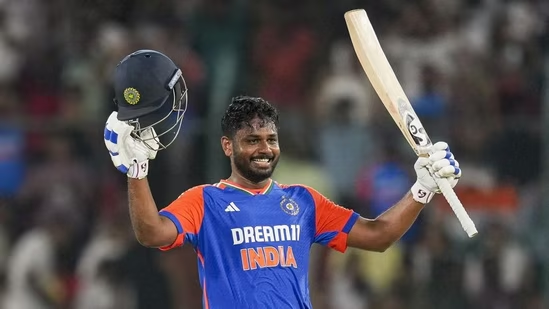
Few players in Indian cricket divide opinion quite like Sanju Samson. Blessed with sublime timing and effortless power, the Kerala skipper has long been viewed as one of India’s most naturally gifted batters. Yet, despite his undeniable talent, his international career has been sporadic, often defined by starts rather than finishes.
That said, Samson’s ODI record is impressive for someone with limited chances. He averages above 50 in the format and has repeatedly shown that he can anchor innings or shift gears when required. Unlike T20Is, where his role has often been muddled, the ODI format seems to bring out his best — giving him time to settle before unleashing his range of strokes.
Adding Samson to the XI would also provide flexibility. He can bat anywhere from No. 3 to No. 6 and also serve as a backup wicketkeeper, giving the team an extra tactical option. In Iyer’s absence, his experience in handling high-pressure situations could prove invaluable.
The main question around Samson is consistency. He has occasionally struggled to convert starts into big innings, but with a proper run of games, he could very well cement his spot. The South Africa tour could be that defining opportunity he’s waited for.
Bonus Pick: Ruturaj Gaikwad
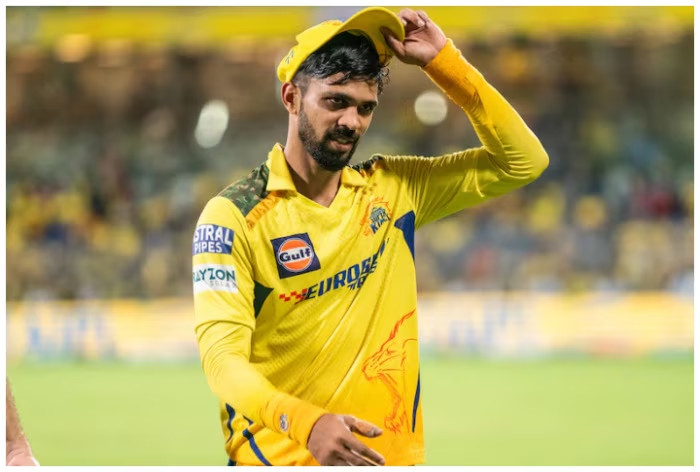
While not a like-for-like replacement for Iyer, Ruturaj Gaikwad is another name in contention. Traditionally an opener, Gaikwad has shown the ability to anchor innings and pace his knocks intelligently. If India wants to shuffle the order slightly, promoting someone like Gaikwad to No. 4 could be an interesting experiment.
However, this would mean shifting other batters around — something the team management might prefer to avoid for the sake of stability.
Conclusion
Replacing Shreyas Iyer won’t be easy. His calm presence and match awareness have been integral to India’s ODI success. Yet, this setback could be a blessing in disguise — an opportunity to test the next generation and build greater depth ahead of upcoming ICC tournaments.
Whether it’s Patidar’s composure, Tilak’s energy, or Samson’s x-factor, India is fortunate to have multiple options capable of stepping up. The series against South Africa might just reveal which of them is ready to take the mantle — and who could become India’s next great middle-order mainstay.